

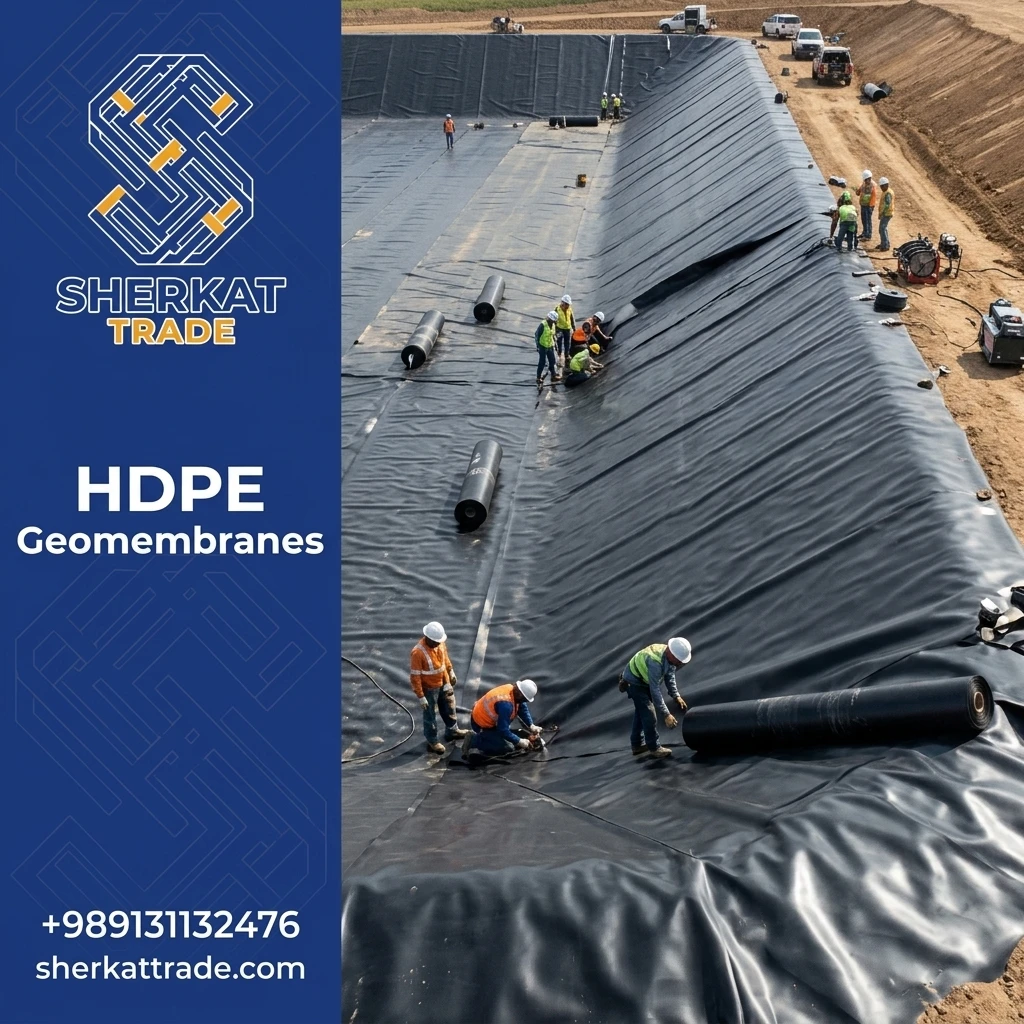
In the fields of civil engineering, environmental protection, and modern industrial agriculture, containment is a primary challenge. Preventing fluid migration—whether protecting pristine groundwater from hazardous landfill leachate, or conserving millions of cubic meters of precious freshwater in agricultural reservoirs—requires an absolute barrier. High-Density Polyethylene (HDPE) geomembranes have emerged as the global gold standard for these demanding applications.
HDPE geomembranes offer an unparalleled combination of chemical resistance, mechanical strength, long-term UV durability, and cost-effectiveness. In this definitive guide, we explore the deep engineering science, manufacturing standards, application guidelines, and installation practices that define successful containment projects worldwide.
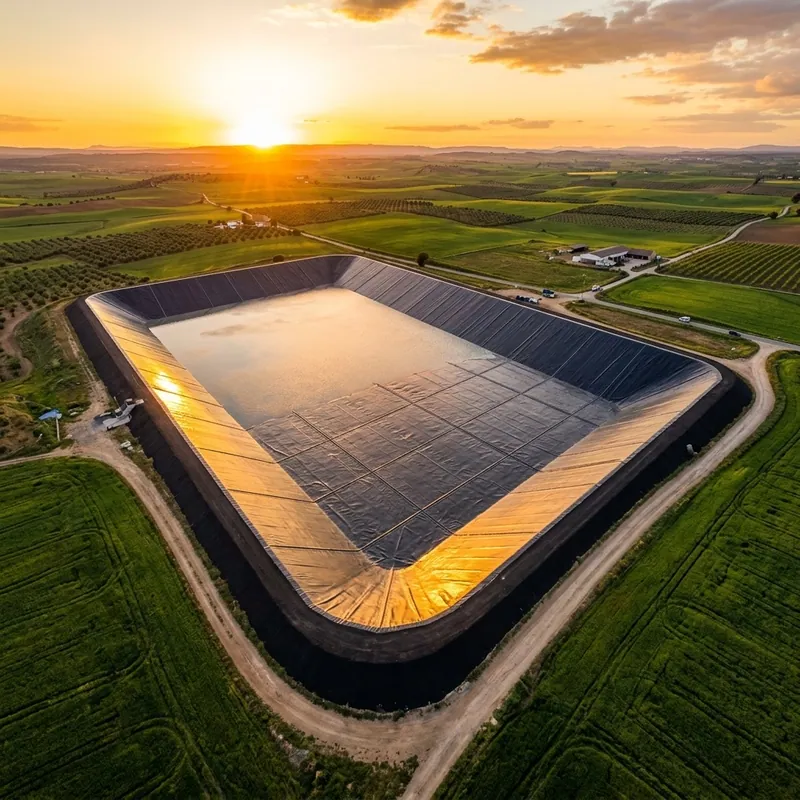
Massive Agricultural Reservoir Lined with Premium HDPE Liner
Figure 1: Wide-angle view of a professionally welded HDPE geomembrane reservoir liner, highlighting perfect panel alignment and edge anchoring.
The Science & Engineering of HDPE Geomembranes
To understand why High-Density Polyethylene is preferred over alternative polymers like PVC, LLDPE, or EPDM, we must examine its molecular structure. HDPE is characterized by a high density-to-strength ratio. Its molecular chain has minimal branching, which results in strong intermolecular forces and an extremely dense crystalline structure.
This high crystallinity gives HDPE its defining engineering characteristics: high tensile strength, exceptional resistance to chemicals, hydrocarbons, and aggressive acids, and an incredibly low permeability coefficient.
🧬
Chemical Inertness
Unlike PVC, which contains plasticizers that leach over time, HDPE is chemically inert. It does not degrade when exposed to aggressive industrial waste, chemical fertilizers, or biological leachate.
☀️
UV Stabilization
By compounding 2% to 3% carbon black into the virgin resin, HDPE gains exceptional resistance to photo-oxidation, allowing it to withstand decades of direct, intense sunlight exposure.
❄️
Thermal Stability
HDPE maintains its flexibility and mechanical properties across an extreme temperature spectrum, from sub-zero winter freezes to intense desert heat without cracking or melting.
Smooth vs. Textured Geomembranes: Making the Right Choice
Geomembranes are manufactured in two main surface configurations: smooth and textured. Choosing the correct surface texture is not just an aesthetic decision; it is a critical safety and stability requirement determined by geotechnical slope calculations.
⚙️ Understanding Surface Configurations
Smooth HDPE Liners
These are the most common and cost-effective liners. They offer outstanding hydraulic flow characteristics and are perfect for flat areas, shallow containment cells, aquaculture ponds, and water canals where high friction is not required.
Textured HDPE Liners
Engineered with single-sided or double-sided textured surfaces, these liners dramatically increase the friction angle between the geomembrane and adjacent soils or geotextiles. They are essential for steep side slopes, landfill cells, and mining heap leach pads to prevent catastrophic slope failures or landslides.
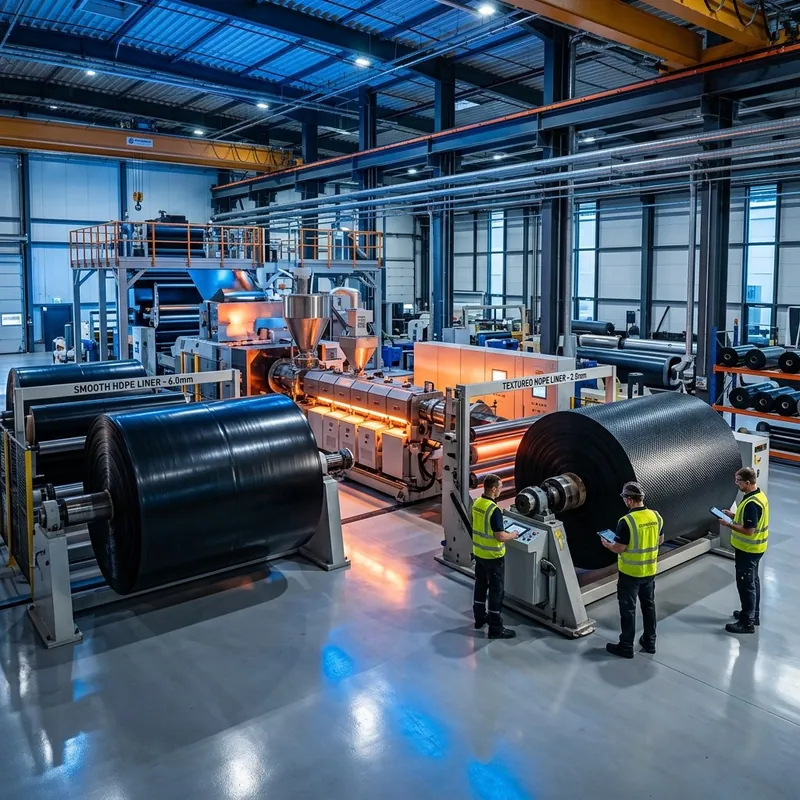
Advanced Extrusion Lines for Smooth and Textured HDPE Liners
Figure 2: Quality-controlled industrial extrusion of premium HDPE geomembrane sheets under strict molecular density parameters.
Primary Applications: Where Reliability Cannot Be Compromised
Due to their highly specialized physical and chemical properties, HDPE geomembranes are implemented across diverse industries where environmental safety and resource conservation are critical.
Key Industrial Applications
- 💧
Agricultural Water Reservoirs: Prevents water loss via earth seepage, securing vital resources for irrigation systems. - 🗑️
Municipal Landfill Cells: Forms the primary bottom barrier to trap toxic leachate, protecting shallow groundwater reservoirs. - 🐟
Aquaculture & Fish Ponds: Creates highly sanitary, easy-to-clean bottoms that eliminate soil contamination and disease vectors. - ⛏️
Mining Heap Leach Pads: Withstands aggressive chemical solutions used to extract precious metals from crushed ore.
Standard Liner Thicknesses
Aquaculture & Ponds
0.75 mm to 1.0 mm
Agricultural Reservoirs
1.0 mm to 1.5 mm
Landfills & Containment
1.5 mm to 2.0 mm
Mining Heap Leaching
2.0 mm to 2.5 mm+
Technical Specifications & GRI-GM13 Standards
Procuring geomembranes requires strict verification of material testing parameters. High-quality HDPE liners must adhere to the GRI-GM13 specification, developed by the Geosynthetic Research Institute. This set of global standards consolidates diverse ASTM test methods to establish the minimum engineering parameters required for safe commercial deployment.
| Physical Property | ASTM Test Method | GRI-GM13 Standard Threshold |
|---|---|---|
| Nominal Thickness | ASTM D5199 | -10% maximum deviation from nominal specified value. |
| Density | ASTM D1505 | Minimum of 0.940 g/cm³ for pure HDPE resin. |
| Tensile & Elongation | ASTM D6693 | Excellent yield strength and over 700% ultimate elongation. |
| Puncture Resistance | ASTM D4833 | High resistance against localized aggregate pressure. |
| Tear Resistance | ASTM D1004 | Prevents mechanical damage propagation during placement. |
| Carbon Black Content | ASTM D4218 | Strictly maintained between 2.0% and 3.0% for UV stability. |
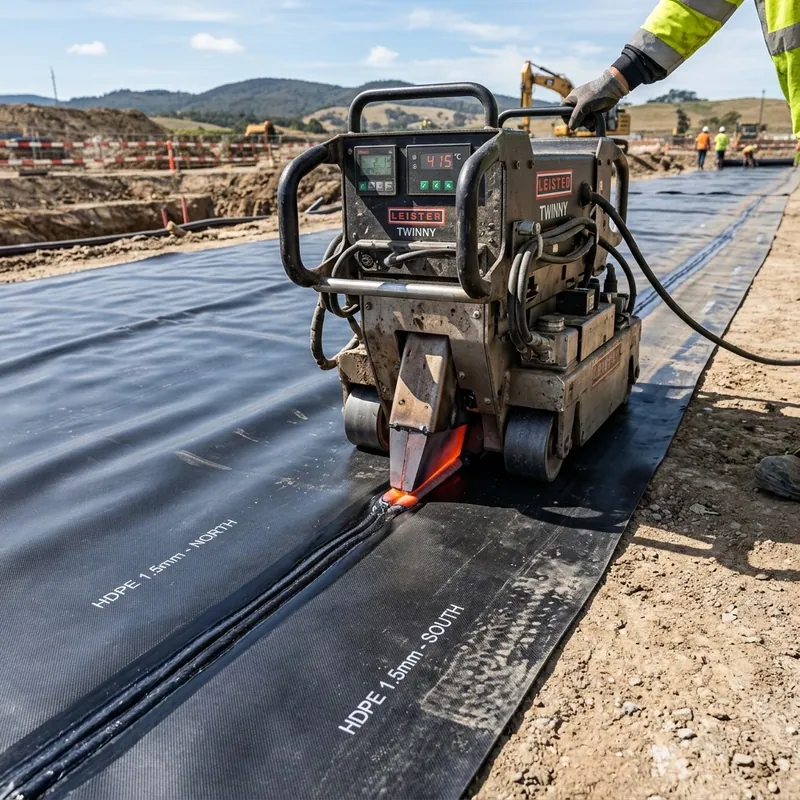
Double-Track Hot Wedge Seam Welding in Progress
Figure 3: Hot wedge welding machine systematically melting and bonding overlapping geomembrane panels in field deployment.
Field Installation & Seam Quality Assurance
Even the highest quality geomembrane will fail if it is installed improperly. Field welding is a precise art that combines chemical science with mechanical skill.
Double-Track Hot Wedge Welding
This is the primary method used for long straight seams between overlapping geomembrane panels. The machine uses a heated copper wedge that slides between the sheets, heating their surfaces to fusion temperature before they are compressed by heavy rollers. This creates a double weld seam separated by an empty air channel, allowing for non-destructive air pressure testing.
Extrusion Fillet Welding
Used primarily for detail work, repairs, corners, and pipe penetrations where the hot wedge welder cannot operate. A handheld extrusion gun heats the geomembrane surface while extruding a molten bead of HDPE polymer directly onto the seam. This creates a high-strength, flexible structural weld.
Seam Testing & Non-Destructive QA
Seams must be systematically tested to ensure 100% containment integrity. Standard methods include: Air Channel Testing (ASTM D5820), where the air channel of a double-track weld is pressurized to verify if pressure holds over a 5-minute period; and Vacuum Box Testing (ASTM D5641), which uses soapy water and a clear vacuum box to detect bubble-forming leaks in extrusion repairs.
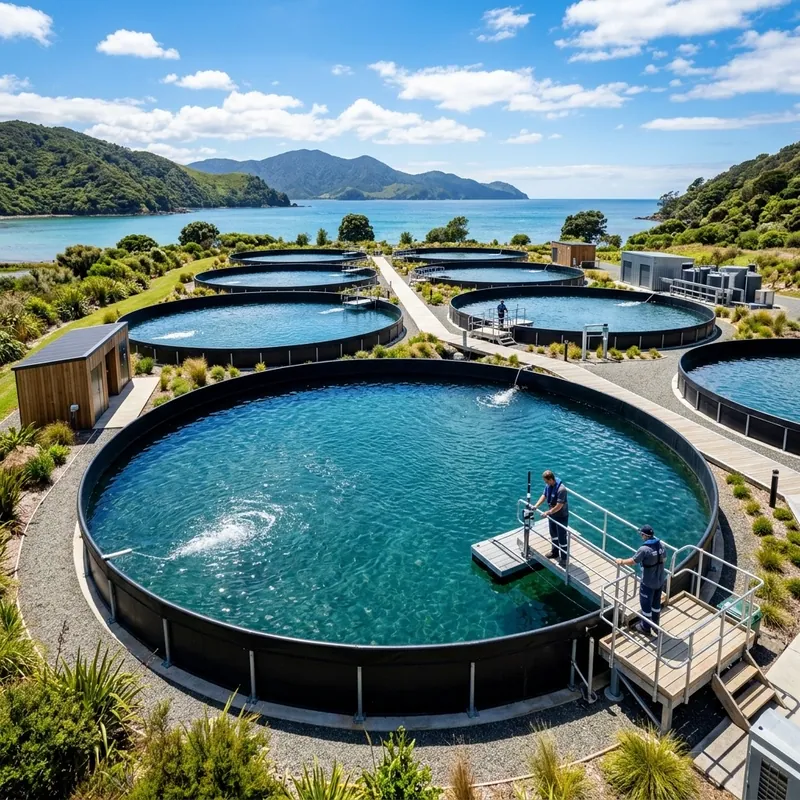
Sustainable Aquaculture Containment Using HDPE Liners
Figure 4: Environmentally safe commercial circular fish farming ponds lined with dense HDPE geomembrane.
Environmental Preservation & Long-Term Sustainability
At first glance, installing massive sheets of black plastic might seem environmentally challenging. However, HDPE geomembranes are highly ecological containment solutions.
Water Conservation: In arid and semi-arid regions, earth-lined reservoirs lose up to 40% of their volume due to seepage. HDPE liners eliminate this waste, preserving crucial water for agricultural crops.
Groundwater Protection: By isolating toxic industrial residues, heavy chemicals, and municipal garbage leachate, these barriers safeguard domestic drinking water reserves.
Recyclability & Long Life: Pure, high-grade virgin HDPE contains zero plasticizers, meaning it will not decay or degrade into microplastics under normal conditions. It can endure for over 100 years buried in landfills, and is fully recyclable if recovered.
Top 5 Commercial & Engineering Mistakes
1. Inadequate Subgrade Preparation
Deploying heavy HDPE sheets directly over rocky, uncompacted subgrade is a recipe for puncture failures. The ground must be perfectly smooth, free of sharp stones, roots, and organic matter, and preferably lined with a heavy geotextile underlayment.
2. Neglecting Thermal Expansion & Contraction
Polyethylene expands and contracts significantly during temperature swings. Welding the liner too tightly on a hot afternoon will cause extreme tension and potential tearing when it cools during the night. Specialized slack ("waves") must be designed into the panel layouts.
3. Buying Recycled Resins Instead of Virgin HDPE
Low-grade liners made from recycled municipal plastics will lack the uniform molecular density of virgin resins. They are highly susceptible to stress-cracking, premature UV oxidation, and chemical degradation.
4. Poor Quality Control at Field Seams
Field welds must be systematically tested via air pressure or vacuum testing. Skipping QC steps to save time routinely leads to expensive fluid losses and regulatory penalties.
5. Choosing Incompatible Liners for Sloped Surfaces
Using smooth HDPE liners on steep containment slopes can cause soil cover layers or concrete protections to slide off due to low surface friction. Always specify single- or double-textured geomembranes for slopes greater than 1:10.
Frequently Asked Questions
What is the expected lifespan of an HDPE geomembrane?
+
When buried (such as in landfill cells under soil protection), high-quality HDPE liners manufactured in compliance with GRI-GM13 are projected to last for over 100 to 200 years. If directly exposed to extreme UV radiation, their lifespan ranges between 20 to 30 years depending on the masterbatch quality.
Is smooth or textured geomembrane better for steep side slopes?
+
Textured geomembrane is absolutely required for steep side slopes. The texturing increases the interface friction angle between the plastic liner and the soil or geotextile, preventing landslides and containment failures on steep walls.
What does GRI-GM13 compliance mean?
+
GRI-GM13 is a global standard developed by the Geosynthetic Research Institute. It dictates the exact physical, mechanical, and chemical properties that an HDPE geomembrane must satisfy, including tensile strength, density, carbon black distribution, and stress crack resistance.
Can HDPE liners be repaired if punctured?
+
Yes. Punctured areas can be easily repaired. A circular patch of the same HDPE material is cut to cover the damaged area, overlapping it by at least 15 cm. The patch is then welded in place using an extrusion fillet welder and verified using a vacuum box test.
Are HDPE liners safe for fish farming and potable water?
+
Yes, provided they are made from 100% virgin resin with food-safe additives. High-quality virgin HDPE does not leach toxic chemicals, making it ideal for aquaculture, fish farming, and drinking water containment systems. Always look for NSF/ANSI 61 certifications.
What is the difference between HDPE and LLDPE geomembranes?
+
HDPE (High-Density Polyethylene) offers superior chemical resistance, higher tensile strength, and excellent UV resistance, making it perfect for exposed reservoirs, landfills, and flat open ponds. LLDPE (Linear Low-Density Polyethylene) is much more flexible and has higher elongation, making it ideal for waste cells with high settlement or irregular contours where high puncture and stretch accommodation are required.
How do we test HDPE weld seams in the field?
+
Field seams are tested using both non-destructive and destructive methods. Non-destructive methods include Air Channel Testing, where the channel between double-track welds is pressurized to check for leaks, and Vacuum Box Testing for extrusion welds using soapy water. Destructive testing involves cutting physical seam samples and placing them in a field tensiometer to verify peel and shear strength according to ASTM D6392 standards.
Partnering with SherkatTrade for Premium Geosynthetic Solutions
Geomembrane design and installation are precise engineering sciences. Choosing the correct thickness, surface texture, and ensuring strict adherence to GRI-GM13 standards are non-negotiable details for ensuring long-term containment success.
At SherkatTrade, we utilize the advanced petrochemical infrastructure of Iran to supply high-quality HDPE liners at highly competitive global rates. Our products successfully satisfy all ASTM and GRI-GM13 parameters, serving governmental infrastructure projects, civil waste cells, and agricultural developers globally.
Secure Your Containment Projects Today
Reach out to our engineering team for technical evaluations, custom size recommendations, and highly competitive pricing for exports to the CIS, Middle East, and worldwide.