

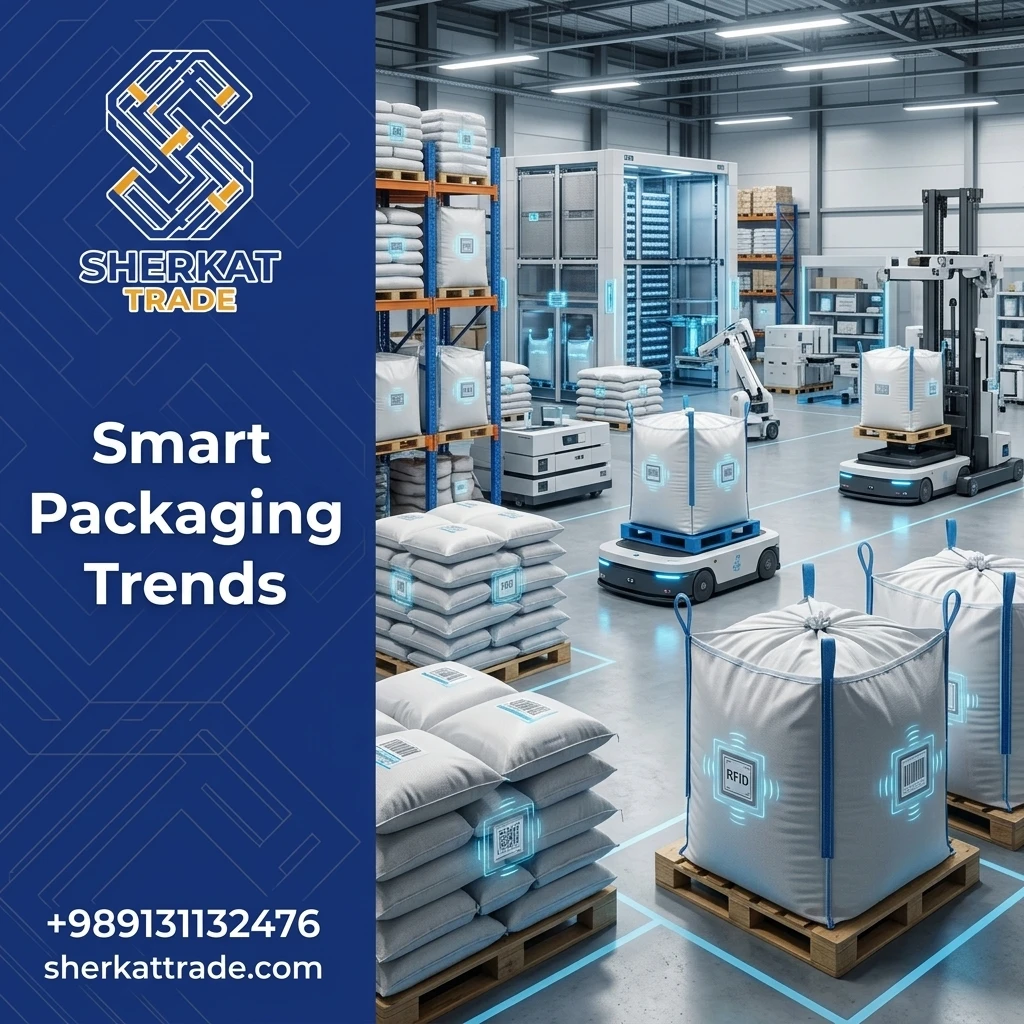
The packaging landscape is undergoing a tectonic shift. In 2026, the polypropylene (PP) woven bags and Flexible Intermediate Bulk Container (FIBC) industry is no longer just about basic containment and transportation. It has evolved into a highly technical, compliance-driven, and sustainability-focused sector. With new global regulations like the European Union's Packaging and Packaging Waste Regulation (PPWR) coming into full effect, manufacturers and exporters face an unprecedented mandate: innovate or be excluded from the global market.
This comprehensive, definitive guide delves deeper than ever before into the technological marvels and smart innovations defining the future of PP woven packaging. We will explore how advanced polymer science, circular economy mandates, and digital traceability are converging to create the next generation of bulk packaging solutions. Whether you are exporting petrochemicals from the Middle East, premium agricultural goods from Asia, or construction materials globally, understanding these trends is the absolute key to maintaining a competitive edge.
1. The Circular Economy Mandate and Global Compliance
For decades, the standard approach to industrial packaging was linear: extract fossil fuels, manufacture plastic, use the bag once, and dispose of it in a landfill. Today, the linear model is legally, morally, and economically obsolete. The transition to a circular economy is the single most significant driver of innovation in the PP woven bags sector globally.
🌍 Extended Producer Responsibility (EPR)
EPR schemes are becoming mandatory across major markets, not just in Europe, but increasingly in North America and Asia. This means that the brand owner or importer is financially responsible for the packaging at its end-of-life stage. Packaging that is difficult or impossible to recycle incurs massive "eco-modulation" taxes. Conversely, highly recyclable designs are rewarded with significantly lower fees, directly impacting your bottom line.
⚖️ The PPWR Impact
The EU's Packaging and Packaging Waste Regulation (PPWR) dictates that by 2030, all packaging must be designed for recycling (DfR). Furthermore, it mandates specific targets for the inclusion of Post-Consumer Recycled (PCR) content in plastic packaging. This forces a complete re-evaluation of how FIBCs and woven bags are structured, printed, laminated, and distributed.
The Challenge with Traditional Laminates
Historically, to achieve a moisture barrier and high-quality photographic printing, manufacturers laminated a BOPP (Biaxially Oriented Polypropylene) film onto the PP woven fabric using a layer of PE (Polyethylene) or mixed polymers. While functionally excellent at protecting the product, these multi-material structures are incredibly difficult to recycle. Separating the different polymer layers at the recycling facility is economically unviable and consumes too much energy. The industry had to invent a completely new structural solution.
2. The Breakthrough: Mono-Material Architecture
The definitive answer to the recyclability crisis is Mono-Material Design. By engineering every single component of the bag—the fabric, the lamination, the ink base, the liner, and even the sewing thread—from the exact same polymer family (Polypropylene), the entire package can be thrown into a single recycling stream. It can be melted down and extruded into high-quality secondary plastic without any complex separation processes.
How Mono-Material Bags are Engineered
The Core Fabric (100% PP)
The foundation remains high-tenacity polypropylene woven fabric. Advances in extrusion technology, specifically the use of metallocene catalysts, allow for stronger tapes at lower deniers, maintaining the core strength required for heavy 25kg or 50kg loads while reducing overall weight.
The Lamination Layer (100% PP)
Instead of using low-density polyethylene (LDPE) as the bonding agent, modern extrusion coating lines now use specialized, high-melt-flow polypropylene resins. This acts as both the powerful adhesive for the BOPP film and an excellent moisture barrier, keeping the structure entirely within the PP family.
The Print Film (BOPP)
Biaxially Oriented Polypropylene is, by definition, part of the PP family. When reverse-printed with compatible inks and bonded using the PP lamination layer, the result is a stunning, high-gloss (or matte) bag that is 100% homogeneous in its polymer makeup, achieving a perfect score in European recycling audits.
The Inner Liner (CPP or Specialized PP)
Historically, inner liners for fertilizers and fine powders were made from LDPE because of its superior flexibility and tear resistance. Now, manufacturers are producing highly flexible Cast Polypropylene (CPP) liners or utilizing unique co-extruded multi-layer PP films that offer the exact flexibility of PE without compromising the mono-material classification.
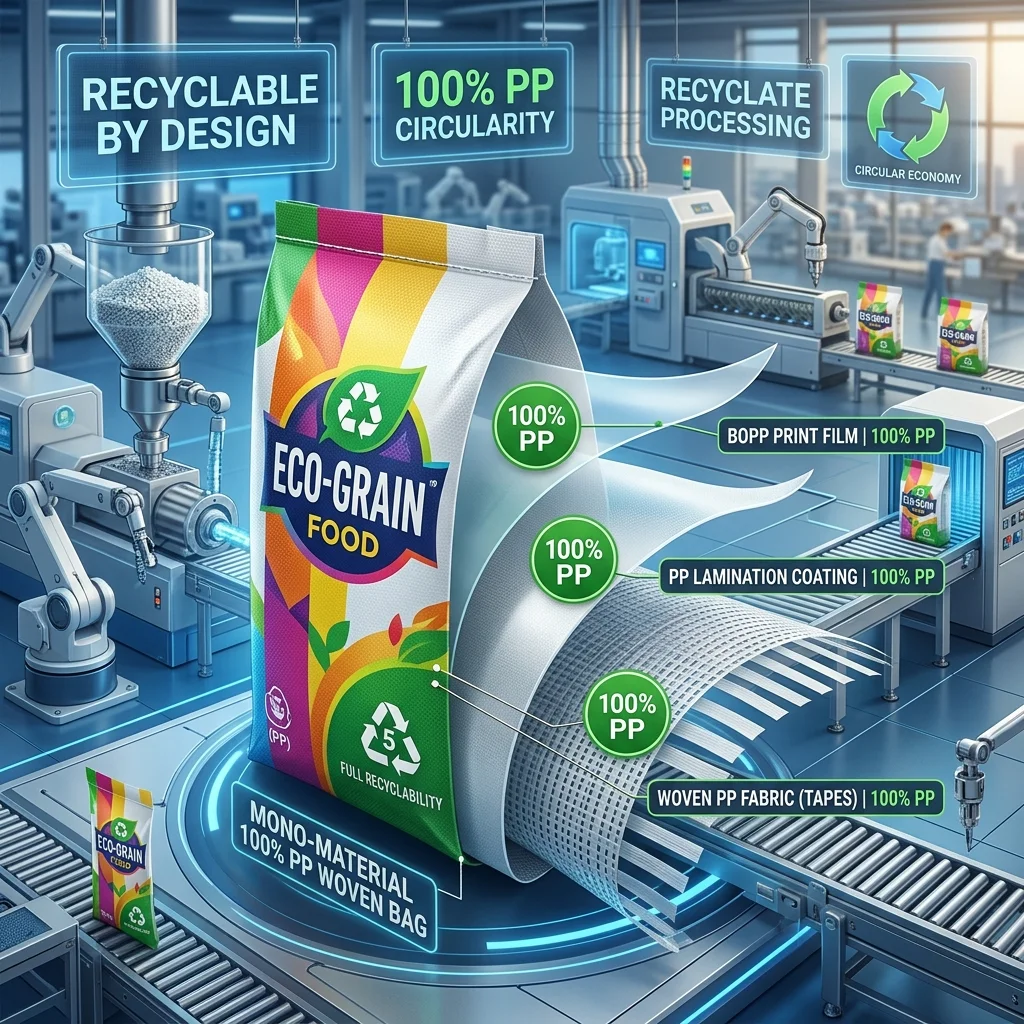
Next-Gen Mono-Material Design
Advanced architectures designed for the circular economy, keeping fabric, lamination, and print film entirely within the PP family.
Visualization of modern high-tenacity, 100% PP mono-material woven sack structures.
3. Mastering Post-Consumer Recycled (PCR) Content
Achieving 100% recyclability is only half the equation. The other half is creating robust market demand for recycled plastics. Regulatory bodies are now demanding that new plastic products contain a mandatory minimum percentage of Post-Consumer Recycled (PCR) resin. For heavy-duty packaging like PP woven bags, which must survive massive drop shocks and rough handling, this presents a formidable engineering challenge.
The Challenge with PCR in Woven Sacks
When plastic is recycled, its polymer chains degrade, oxidize, and shorten. If a manufacturer attempts to extrude tapes using 100% PCR, the resulting fabric will be highly brittle, inconsistent in thickness, and will fail dramatically under the stress of a 50kg load. The challenge is balancing sustainability mandates with absolute safety (burst strength, tear resistance, and drop impact survival).
Furthermore, PCR resins often contain microscopic impurities, residual inks, and degraded polymers that can clog fine extrusion filters, causing tape breakage during high-speed stretching. They can also affect the aesthetic appeal, resulting in off-white, greyish, or speckled fabric rather than pure, bright white virgin material.
Finally, for food-grade applications (like flour, rice, or sugar bags), standard PCR cannot be used due to contamination risks. Food-contact safe PCR requires advanced chemical recycling technologies that break the plastic down to its monomers before rebuilding it—a process that is currently very expensive.
The 2026 Solution: Advanced Compatibilizers & Co-Extrusion
- ✓
Multi-Layer Extrusion (A-B-A Technology)
The most advanced tapes are now co-extruded in three distinct layers. The inner core (Layer B) contains up to 30-40% PCR, while the thin outer skins (Layers A) are made of virgin PP. This completely encapsulates the recycled material, providing a pristine, bright white printing surface and superior tensile strength on the outside, while satisfying PCR volume requirements.
- ✓
Polymer Chain Extenders
Advanced chemical additives are used in the masterbatch to repair and cross-link the shortened polymer chains of the PCR material during the heat of extrusion. This "healing" process restores a significant portion of the lost mechanical strength and elasticity.
- ✓
High-Precision Laser Filtration
Laser-drilled continuous screen changers allow manufacturers to use higher volumes of potentially contaminated PCR without stopping the extrusion line to clean filters, drastically improving manufacturing efficiency and reducing downtime.
4. Extreme Lightweighting: Doing More with Less
Lightweighting is the exact science of reducing the total amount of plastic used in a package without compromising its performance, burst strength, or stackability. In the context of PP woven bags, this primarily means reducing the GSM (Grams per Square Meter) of the woven fabric.
| Evolution Phase | Standard GSM (50kg Bag) | Technological Enabler |
|---|---|---|
| Past (2010s) | 85 - 95 GSM | Basic extrusion, high calcium carbonate (filler) usage to aggressively cut costs, requiring much thicker, heavier tapes to achieve acceptable strength. |
| Present (Early 2020s) | 65 - 75 GSM | Better virgin resin formulations, advanced hot-air stretching ovens, and sophisticated optimization of the warp/weft ratio during circular weaving. |
| Future (2026 and beyond) | 50 - 58 GSM | Nano-composite additives, metallocene catalysts, and high-speed multi-stage drawing systems producing ultra-high tenacity tapes that are paper-thin but incredibly strong. |
💡 The Economic Impact of a 10 GSM Reduction
Consider a massive cement or fertilizer operation filling 10 million bags annually. Reducing the bag weight from 75g to 65g saves exactly 100 metric tons of plastic per year. At an average resin cost of $1,200 per ton, that is a direct raw material saving of $120,000. This does not even include the massive savings on container shipping weight, and the drastic reduction in the company's carbon footprint and EPR taxation liabilities. Lightweighting is the most direct path to increased profitability.
5. Automation-Ready: The Rise of AD*STAR and Block Bottom Valve Sacks
As global labor shortages continue and industrial production scales up to unprecedented levels, manual filling lines are being rapidly replaced by high-speed, fully automated robotic filling stations. A standard open-mouth sewn bag is highly inefficient for these systems. Enter the Block Bottom Valve Sack, commonly known in the industry by the trademarked name AD*STAR.
⚡
High-Speed Filling
Valve sacks eliminate the need for manual sewing after filling. The bag is quickly injected with product via a spout, and the internal pressure of the heavy material automatically forces the internal valve shut. Modern automated lines can fill and seal thousands of bags per hour with zero human intervention.
🧱
Perfect Palletization
Unlike traditional sewn bags that bulge in the middle like pillows, block bottom bags form perfect rectangular bricks when filled. This allows for incredibly stable, high-stacking pallets, maximizing shipping container space and completely eliminating transit damage from collapsing pallets.
💨
Micro-Perforation Tech
For powdery materials like cement, gypsum, or fine flour, entrapped air during high-speed filling acts like a balloon and causes bags to burst. Advanced hot-needle nano-perforation allows air to escape instantaneously while keeping water out and preventing microscopic powder leakage.
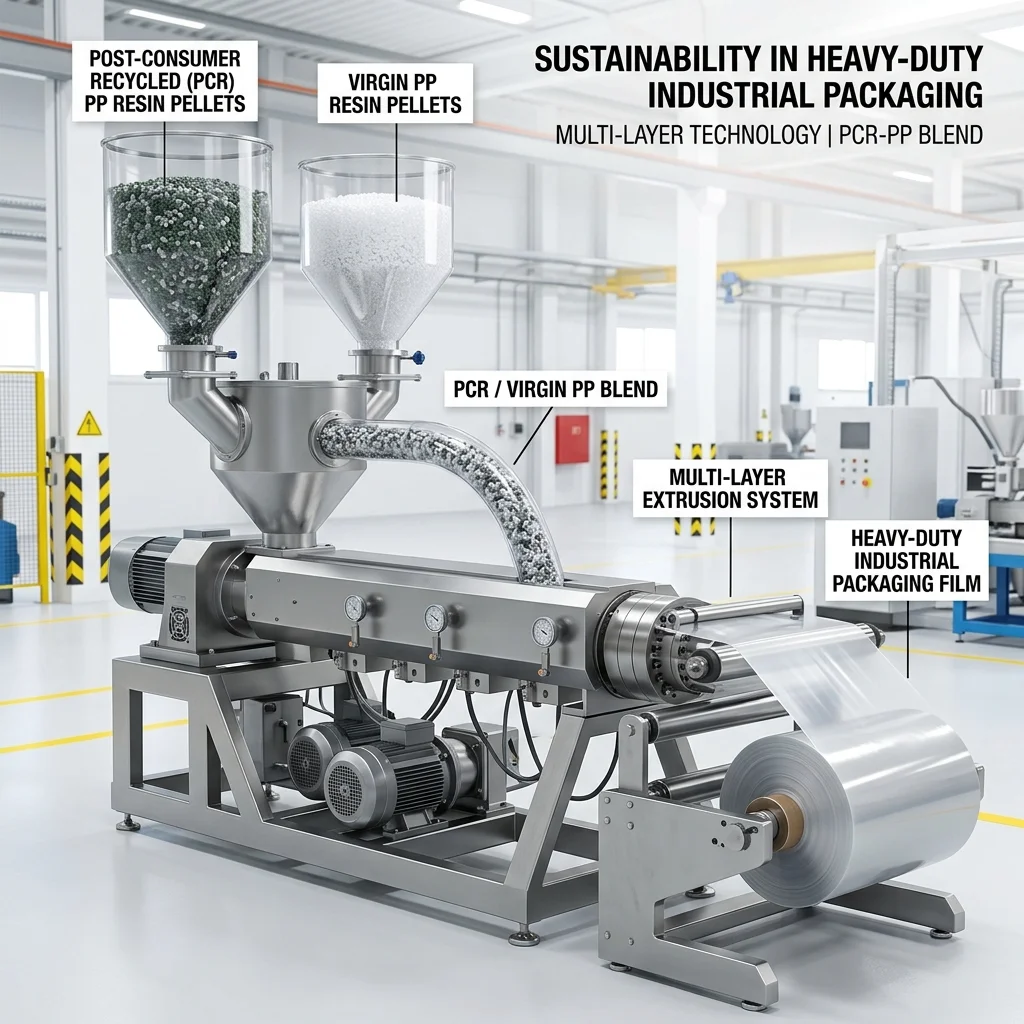
PCR Resin Integration
Blending Post-Consumer Recycled plastics with virgin PP in advanced multi-layer extrusion systems for sustainable heavy-duty films.
A-B-A co-extrusion technology securely encapsulating PCR content in industrial packaging.
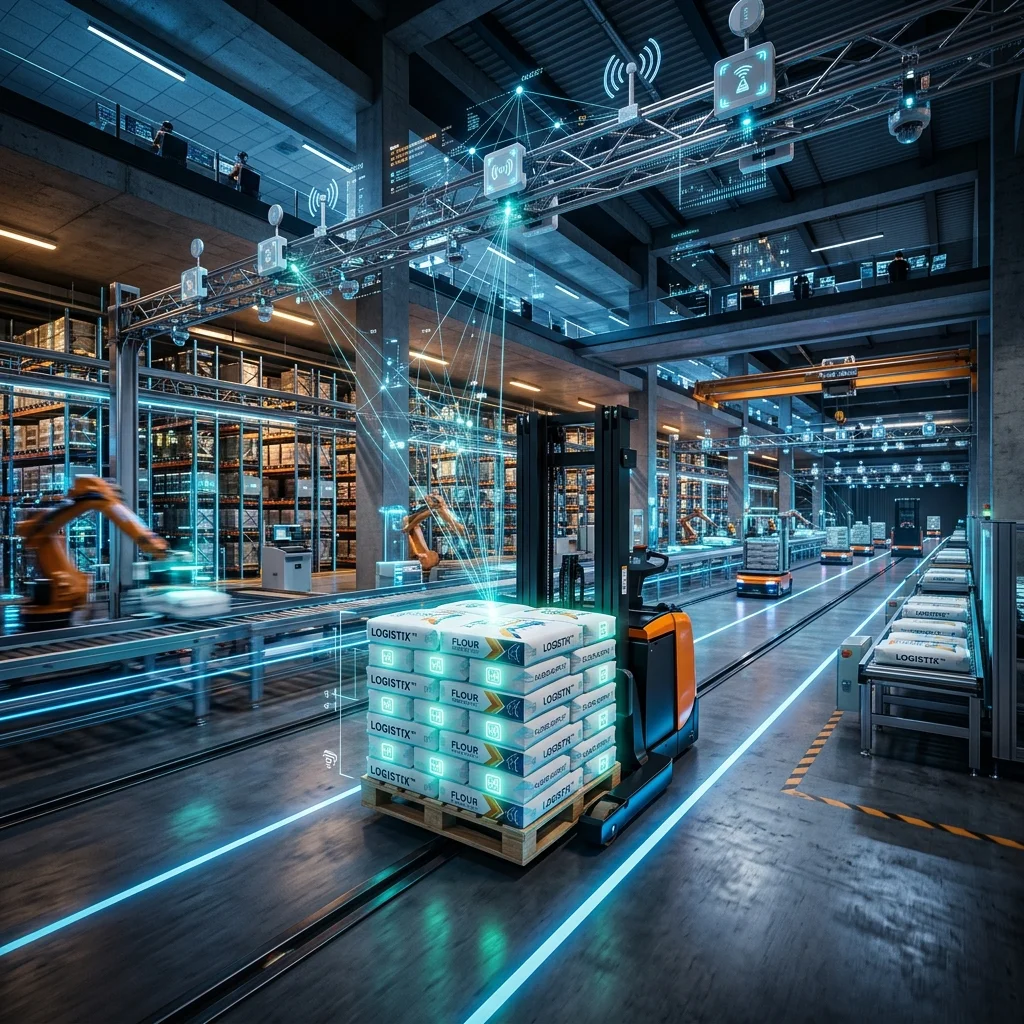
Automated Digital Logistics
Perfectly palletized block-bottom valve sacks communicating directly with overhead warehouse sensors via embedded RFID chips.
Real-time inventory and supply chain tracking enabled by smart packaging.
6. Digital Traceability: Smart Packaging, QR Codes, and RFID
A bag is no longer just a physical barrier protecting the product; it is a critical information carrier. In highly regulated industries like pharmaceuticals, agrochemicals, and premium human food, traceability from the factory gate to the end consumer is strictly non-negotiable. Smart packaging bridges the physical and digital worlds.
📱
Dynamic QR Codes & 2D Barcodes
Static barcodes are rapidly being replaced by serialized 2D Matrix codes printed via ultra-fast continuous inkjet systems directly onto the BOPP film or fabric. These codes provide completely unique identifiers for every single bag produced. Consumers or customs agents can scan the bag with a smartphone to instantly verify authenticity, view laboratory test results, check the exact date of harvest/manufacture, and track the exact carbon footprint of that specific batch.
📡
RFID Integrated FIBCs
For massive 1-ton bulk bags (FIBCs), passive UHF RFID tags are now being sewn directly into the lifting loops or placed in specialized document pockets. As a forklift carrying the FIBC drives through a warehouse door, overhead antennas automatically register the movement. This provides massive chemical plants and global distribution centers with 100% real-time, error-free inventory management without any manual scanning required.
🛡️
Anti-Counterfeiting Technologies
To combat the multi-billion dollar counterfeit agricultural seed and agrochemical market, smart packaging now incorporates invisible UV-reactive inks, micro-text hidden within the graphic design that requires a magnifying glass to read, and tamper-evident acoustic seals that permanently change color or pattern once the bag is opened, guaranteeing product integrity.
7. Extreme Weather Defense: Next-Gen UV Stabilization
Polypropylene is naturally highly susceptible to photo-degradation. When exposed to ultraviolet (UV) light, the polymer chains break down through photo-oxidation, causing the fabric to become brittle and eventually turn to dust. For bags exported to the Middle East, Africa, or stored in open agricultural fields, extreme UV defense is absolutely critical for survival.
HALS Technology Evolution
Traditional UV absorbers simply soaked up radiation until they were depleted, offering only short-term protection. Modern packaging utilizes advanced Hindered Amine Light Stabilizers (HALS). These act as chemical scavengers, continuously hunting down and neutralizing the free radicals created by UV exposure, essentially "healing" the plastic at a molecular level and extending outdoor life from mere weeks to well over 12 months in harsh sunlight.
Heat Management (IR Reflectance)
A massive new trend is incorporating Infrared (IR) reflective pigments into the masterbatch. While standard white bags reflect some light, IR-optimized bags actively reflect the heat-generating spectrum of sunlight. This prevents the internal temperature of the bag from dangerously spiking, which is absolutely vital when storing volatile agrochemicals, sensitive seeds, or heat-prone food products in desert environments like the UAE or Saudi Arabia.
8. Printing Innovations: High-Definition Retail Appeal
As the lines between bulk industrial packaging and consumer-facing retail packaging blur (especially in the rice, pet food, and premium fertilizer sectors), the demand for high-definition, shelf-ready graphics has exploded. PP woven bags are no longer just plain white sacks with simple one-color logos.
HD Flexographic Printing
Traditional flexo printing on rough woven fabric resulted in bleeding inks and low-resolution images. In 2026, the use of digitally engraved, high-resolution polymer plates and advanced corona treatment of the fabric surface allows for stunning 6-to-8 color prints directly onto the uncoated woven fabric, achieving near-photographic quality without the need for expensive BOPP lamination.
Rotogravure on BOPP Films
For the absolute highest premium look (used heavily in the export of Basmati rice and premium pet foods), reverse-printed BOPP film using rotogravure technology remains king. The innovation here is the shift to water-based, solvent-free inks to meet strict environmental regulations, and the ability to combine ultra-glossy and soft-touch matte finishes on the exact same bag to create a stunning tactile experience.
9. Industry-Specific Smart Adaptations
The "one-size-fits-all" approach to packaging is dead. Modern manufacturers are customizing their bags at a microscopic level to meet the exact demands of specific global industries.
Agriculture & Grain Transport
Breathability vs. Barrier: Wheat and corn require maximum breathability to prevent condensation and mold during transit, meaning uncoated, precisely woven mesh bags are essential. Conversely, milled rice requires absolute moisture barriers (BOPP laminated) to retain its delicate aroma and prevent clumping.
Chemicals & Hazardous Materials
Anti-Static FIBCs: When filling fine chemical powders at high speeds, massive amounts of static electricity are generated. In an explosive environment, a single spark can cause a catastrophe. Type C and Type D anti-static FIBCs feature woven-in conductive carbon threads that safely ground electrical charges.
Construction & Dry Mortar
Extreme Durability: Bags for dry mix mortar or cement are thrown onto rough construction sites and left in the rain. These bags require heavy-duty block bottom construction, extreme drop-impact resistance, and micro-perforations to allow air to escape during packing without letting rain water in.
10. Advanced Quality Assurance and Testing
With the push towards lightweighting and the integration of PCR content, physical testing of woven bags has never been more critical. Modern factories utilize sophisticated, computerized testing equipment to guarantee that every batch meets the required safety factors (SF).
Tensile Strength (ASTM D5034)
Using a computerized tensiometer, 5cm strips of fabric are pulled apart to measure the exact breaking point. The system records both warp and weft strength in Newtons, ensuring the bag will not tear when lifted by cranes or forklifts.
Accelerated Weathering (ASTM G154)
Fabric samples are placed inside a QUV chamber where they are blasted with intense ultraviolet light and subjected to alternating heat and condensation cycles to simulate years of desert sun exposure in a matter of days.
Drop Impact Test (ISO 7965)
The most practical test: bags are filled with 50kg of product and dropped repeatedly from a height of 1.2 meters onto solid concrete. They must survive multiple drops on the flat face, sides, and stitched bottom without any rupture.
11. Carbon Footprint Tracking & Life Cycle Assessment
As major corporations adopt net-zero targets, they are increasingly demanding Life Cycle Assessments (LCA) for all their packaging. Polypropylene actually holds a significant advantage over many alternatives.
Lower Energy Manufacturing: Extruding and weaving PP requires significantly less energy and water compared to manufacturing multi-wall kraft paper bags.
Transportation Efficiency: A truckload of empty PP woven bags contains millions of units, whereas empty rigid containers or thick paper bags require far more truckloads, massively reducing scope 3 shipping emissions.
Reusability: Before being recycled, an undamaged, thick agricultural PP bag is often reused up to 5 or 6 times in developing nations for secondary storage, maximizing its utility lifespan.
12. Industry 4.0: Smart Factories and Predictive Maintenance
The factory of 2026 is virtually unrecognizable from a decade ago. Smart factories, interconnected through the Industrial Internet of Things (IIoT), are revolutionizing how PP woven bags are manufactured, drastically reducing waste and maximizing machine uptime.
Circular Looms Optimization
Modern circular looms are now equipped with hundreds of micro-sensors that monitor warp and weft tension in real-time. If a single tape breaks out of the thousands being woven simultaneously, the machine stops instantly, and an alert is sent to the operator's smartwatch detailing the exact position of the break. This eliminates the production of defective fabric rolls completely.
Predictive Extrusion Maintenance
Extrusion lines are the beating heart of a PP bag factory. Advanced AI algorithms now monitor the vibration signatures, oil temperatures, and energy consumption of the massive extrusion gearboxes. The AI predicts a bearing failure weeks before it happens, allowing maintenance to be scheduled during planned downtime, preventing catastrophic machinery breakdowns that cost hundreds of thousands of dollars in lost production.
13. Building Global Supply Chain Resilience
In an era of geopolitical instability and shifting trade routes, relying on a single sourcing geography for your industrial packaging is highly risky. Smart buyers in 2026 are diversifying their sourcing and demanding packaging that optimizes logistics.
Nearshoring vs. Offshoring
While massive volume production remains heavily concentrated in South Asia, major European and American chemical conglomerates are developing "nearshore" secondary suppliers in Eastern Europe and Mexico. These nearshore facilities focus on highly complex, specialized, low-volume runs (like certified anti-static Type C FIBCs) that require short lead times, leaving standard 50kg bags to the massive Asian factories.
Container Optimization
Freight costs can completely destroy the margins on empty bags. Advanced baling technologies now compress thousands of woven sacks under massive hydraulic pressure before wrapping them in protective stretch hoods. This extreme compression allows manufacturers to fit up to 30% more bags into a standard 40ft High Cube container, dramatically lowering the landed cost per unit.
14. Frequently Asked Questions: Future Packaging Trends
Are BOPP laminated bags going to be banned due to recycling issues?
+
No, they will not be banned, but they must absolutely evolve. Traditional BOPP bags that use Polyethylene (PE) to bond the PP film to the PP fabric are problematic for recyclers because the PE contaminates the PP stream. The industry is rapidly shifting to 100% Mono-Material BOPP bags, where a specialized PP adhesive layer replaces the PE, making the entire bag fully recyclable under PPWR regulations.
What is the maximum percentage of PCR (Recycled) content you can put in a heavy-duty bag?
+
Currently, for highly stressed applications (like a 50kg drop-tested bag), the safe limit is generally around 30% to 40% high-quality PCR, usually sandwiched in the middle layer using A-B-A co-extrusion technology. Pushing beyond this without highly advanced (and expensive) chemical compatibilizers risks severe drops in tensile strength and catastrophic bag bursting during transit.
How much does a smart RFID-enabled FIBC cost compared to a standard one?
+
The cost of passive UHF RFID tags has plummeted in recent years. Integrating a durable, washable RFID tag into a bulk bag typically adds between $0.15 to $0.40 to the cost of the FIBC. For high-value chemicals, pharmaceuticals, or complex warehousing operations, the ROI achieved through eliminated scanning labor and zero lost inventory usually covers this cost within weeks of implementation.
Is lightweighting safe for heavy materials like cement or dense fertilizers?
+
Yes, provided it is done through genuine technological improvement, not merely cost-cutting by reducing fabric thickness. Using high-grade metallocene catalysts and advanced stretching ovens, modern PP tapes possess much higher tenacity (strength-to-weight ratio). A modern 65 GSM bag engineered correctly is demonstrably stronger and more flexible than an old 85 GSM bag packed with cheap calcium carbonate filler.
What are the key export requirements for shipping agricultural bags to Europe?
+
Exporting food-contact bags to the EU requires strict adherence to migration testing (ensuring plastic polymers and inks do not leach into the food). The manufacturer must provide certification of compliance with EU Regulation 10/2011, and the facilities should ideally be certified under ISO 22000 or BRC packaging standards.
What is the difference between Cast PP (CPP) and BOPP?
+
While both are made from polypropylene, Cast PP (CPP) is unoriented, making it highly flexible, soft, and an excellent candidate for inner liners or heat sealing layers. BOPP is biaxially oriented (stretched in two directions), making it extremely strong, rigid, clear, and perfect for high-quality rotogravure printing on the outside of the bag.
How are block bottom valve sacks closed without sewing?
+
They feature an internal "valve" sleeve located at the corner of the top block. The filling machine's nozzle is inserted into this sleeve. As the heavy product (like cement or fertilizer) fills the bag, the internal pressure pushes the flexible valve sleeve shut against the inside of the bag, creating a perfect, self-sealing closure without any thread or glue required at the filling line.
Embrace the Packaging Revolution
The year 2026 marks a decisive point of no return for the industrial packaging sector globally. The days of treating packaging as a cheap, disposable afterthought are completely over. By aggressively embracing mono-materials, advanced lightweighting, digital traceability, and circular economy principles, you not only ensure vital compliance with strict global regulations but also drastically optimize your logistics, protect your product flawlessly, and significantly enhance your brand equity on the world stage.
The Future is Fully Circular